U.S. flag

An official website of the United States government, Department of Justice.

Research

NIJ’s Law Enforcement Advancing Data and Science Scholars Program for Academics

New scholars selected!

Meet the 2024 class of scholars.

NIJ typically accepts applications for new scholars in the spring.

The Law Enforcement Advancing Data and Science (LEADS) Academics program offers a unique opportunity for early-career academics to engage and partner with other NIJ LEADS Scholars, all of whom are mid-career police officers, civilians, and fellow academics dedicated to advancing the police profession through science...

Rare Incidents Data Collection Methods to Advance Research on Mass Violence

Thank you and welcome. It is most gratifying for us at NIJ to host, interact with, and learn from our expert research partners. 

We appreciate that you’ve come from all over the country to convene with us here in San Antonio, Texas—the home of “The Alamo.” 

The Importance of Mass Violence Research 

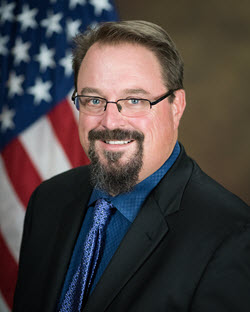
I am David Muhlhausen, the Director of the National Institute of Justice. As...

Real-Time Crime Forecasting Challenge Webinar

October 2016

This webinar will offer a brief overview of the National Institute of Justice and the data science needs of the criminal justice field. In addition, it will provide details about the Crime Forecasting Challenge, including who can submit, how to retrieve datasets, and the submission categories. The overall goal of the Crime Forecasting Challenge is to harness recent advances in data science to drive innovation in algorithms that advance place-based crime forecasting.

White Collar Crime

November 2009

The subprime mortgage industry collapse has led to a record number of foreclosures. In this environment, the interest mortgage fraud has risen, along with questions of how fraud contributed to the crisis. Henry Pontell and Sally Simpson discuss what they have learned about investigating and prosecuting white-collar criminals, the role of corporate ethics in America, and what policymakers and lawyers can learn from evidence of fraud.

Wrongful Convictions: The Latest Scientific Research & Implications for Law Enforcement

March 2013

What does science tell us about case factors that can lead to a wrongful conviction? Dr. Jon Gould of American University will discuss the findings of the first large-scale empirical study that has identified ten statistically significant factors that distinguish a wrongful conviction from a "near miss." (A "near miss" is a case in which an innocent defendant was acquitted or had charges dismissed before trial). Following Dr. Gould's presentation, Mr. John R.

Try Again, Fail Again, Fail Better: Lessons from Community Courts

April 2011

Change doesn't come easy, particularly within an institution as large and complex as the criminal justice system. Greg Berman, Director of the Center for Court Innovation, offered lessons from several efforts to make reform stick in criminal justice settings. In particular, he focused on the development of community courts — experimental court projects that are attempting to reduce both crime and incarceration in dozens of cities across the U.S. and around the world.

Violent Repeat Victimization: Prospects and Challenges for Research and Practice

April 2012

Research tells us that a relatively small fraction of individuals experience a large proportion of violent victimizations. Thus, focusing on reducing repeat victimization might have a large impact on total rates of violence. However, research also tells us that most violent crime victims do not experience more than one incident during a six-month or one-year time period. As a result, special policies to prevent repeat violence may not be cost-effective for most victims.