Homicide
Quantifying the accuracy of low-quality DNA sample analysis from genotyping to genealogical searching and integration as a bioinformatic pipeline
Examining the changing dynamics of homicide in Los Angeles: 1990 - present
Identifying the Scope and Context of Missing and Murdered Indigenous Persons (MMIP) in New Mexico and Improving MMIP Data Collection, Analysis, and Reporting
Tribal Crime, Justice, and Safety, Part 2
Stacy Lee Reynolds and Christine (Tina) Crossland continue their discussion of tribal crime, justice, and safety, including how Native American persons experience crime victimization at higher rates than non-Native people and the jurisdictional complexities in responding to tribal crime, justice, and safety. Read the transcript.
Listen to the first half of Stacy and Tina’s discussion.
Reading and Resources from NIJ
Tribal-Researcher Capacity Building Grants
Indicators of Lone Actor Violent Events: The Problems of Low Base Rates and Long Observational Periods
Community Responses to Serial Murder: A Guide for Law Enforcement
Police Response to Street Gang Violence: Improving the Investigative Process, Executive Summary
Tale of Two Countries: International Fraud-Detection Homicide
Lull Before the Storm: Adult Children Who Kill Their Parents
Arrogant Chameleons: Exposing Fraud-Detection Homicides
Death Investigation: A Guide for the Scene Investigator
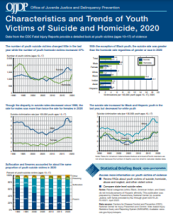
Characteristics and Trends of Youth Victims of Suicide and Homicide, 2020
On Assessing the Scope of Missing Native Americans in Nebraska: Results From a State-Wide Study and Recommendations for Future Research
Similar crimes, similar behaviors? Comparing lone-actor terrorists and public mass murderers
A Descriptive Analysis of Missing and Murdered Native Women and Children in Nebraska, Barriers to Reporting and Investigation, and Recommendations for Improving Access to Justice
Public cooperation and the police: Do calls-for-service increase after homicides?
NIJ-Funded Research on Mass Shootings to Advance Evidence-Based Policy and Practice
Mass public shootings continue to threaten communities in the United States, yet research on this criminal phenomenon is limited. In this full thematic panel, renowned experts will present a series of research projects summarizing NIJ-funded research projects’ newest findings on public mass shootings. The discussion will focus on NIJ’s investment to address the phenomenon of mass shootings through innovative study approaches to advance our understanding of mass shootings and inform prevention efforts. The implications of this research to criminal justice will also be discussed.
See the YouTube Terms of Service and Google Privacy Policy
Amino Acid Specific Stable Isotope Ratios in Human Keratin Tissue for Region-of-Origin and Residency Determination
Comparative Evaluation of Genotyping Technologies for Investigative Genetic Genealogy in Sexual Assault Casework
NIJ-Funded Research on Firearms Violence in Urban Cities Advancing Scientific Evidence to Inform Practice
In this full thematic panel, renowned experts will present a series of papers summarizing the newest findings of NIJ-funded research projects on criminal offenses with firearms in urban areas. Researchers used various criminological and other theories, including routine activity theory, socio-ecological and socio-environmental perspectives, and advanced mixed-study methods, including surveys and spatio-temporal designs, to produce scientific evidence to inform practice.
See the YouTube Terms of Service and Google Privacy Policy