Juvenile offenses
Preparing Pre-Service Teachers To Manage Behavior Problems in the Classroom: The Feasibility and Acceptability of Using a Mixed-Reality Simulator
Cultivating Healing by Implementing Restorative Practices for Youth: Protocol for a Cluster Randomized Trial
The Rolling Hotspot? Perceptions of Behavioral Problems on School Buses Among a Nationally Representative Sample of Transportation Officials
Group Randomized Trial of School-Based Teen Courts to Address the School to Prison Pipeline, Reduce Aggression and Violence, and Enhance School Safety in Middle and High School Students
Moving to the Next Level: Doubly Latent Multilevel Mediation Models With a School Climate Illustration
A Meta-Analytic Review of School-Based Anti-Bullying Programs With a Parent Component
Building Schools' Readiness To Implement a Comprehensive Approach to School Safety
Beyond the Breakfast Club: Variability in the Effects of Suspensions by School Context
The North Carolina Youth Violence Prevention Center: Using a Multifaceted, Ecological Approach to Reduce Youth Violence in Impoverished, Rural Areas
Modeling Ecological Risk, Health Promotion, and Prevention Program Effects for Rural Adolescents
Use and Impact of the Wisconsin Bullying Prevention Program Assessment Tool in Addressing Middle School Bullying
Examining the Relative Utility of PBIS Implementation Fidelity Scores in Relation to Student Outcomes
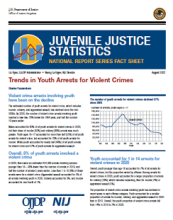
Trends in Youth Arrests for Violent Crimes
The great methods bake-off: Comparing performance of machine learning algorithms
A Randomized Controlled Trial of a Comprehensive, Research-Based Framework for Implementing School-Based Law Enforcement Programs
Social-Ecological Examination of Non-Consensual Sexting Perpetration among US Adolescents
National Juvenile Court Data Archive: Final Technical Report
Project on Human Development in Chicago Neighborhoods
Children of the Incarcerated Must Be Studied, and Responded to, Comprehensively
Arrogant Chameleons: Exposing Fraud-Detection Homicides
Policing In Central and Eastern Europe: Dilemmas of Contemporary Criminal Justice
AN EXEMPLARY PROJECT - JUVENILE DIVERSION THROUGH FAMILY COUNSELING: A PROGRAM FOR THE DIVERSION OF STATUS OFFENDERS IN SACRAMENTO COUNTY, CALIFORNIA
Selection, stability, and spuriousness: Testing Gottfredson and Hirschi's propositions to reinterpret street gangs in self-control perspective
Learning from Doing Evaluating the Effectiveness of the Second Chance Act Grant Program
Reauthorized in 2018, the Second Chance Act (SCA) aims to reduce recidivism and improve outcomes for people returning from state and federal prisons, local jails, and juvenile facilities through the provision of federal grants. During this panel, National Institute of Justice-funded researchers will detail two ongoing evaluations of the SCA grant program:
- An evaluation of the effectiveness of the SCA grant program per Title V of the First Step Act.
- A longitudinal examination of the long-term impacts of the SCA program.
See the YouTube Terms of Service and Google Privacy Policy