Drug crime
Inclusive Research: Engaging People Closest to the Issue Makes for Better Science & Greater Impact; 2023 NIJ Research Conference Plenary
This panel will discuss what inclusive research is, how to conduct it, and what issues and challenges exist about engaging in it. “Inclusive research” has its history as a participatory research method designed to ensure people closest to the issue or problem under study are authentically engaged in the research process rather than simply being “research subjects.” While community-based participatory research has begun to take on greater prominence in the criminal justice realm, such efforts are largely confined to qualitative research inquiries.
See the YouTube Terms of Service and Google Privacy Policy
2023 NIJ Research Conference Opening Ceremony
The theme of NIJ’s 2023 Research Conference was “evidence to action,” and our goal was to bring researchers and practitioners together to learn about the latest research evidence and how it can be implemented to promote safety, equity, and justice.
The opening ceremony included remarks from U.S. Attorney General Merrick B. Garland, Assistant Attorney General for the Office of Justice Programs Amy Solomon, and NIJ Director Nancy La Vigne.
See the YouTube Terms of Service and Google Privacy Policy
Does Exotic Dancing Lead to Prostitution? An Exploratory Study
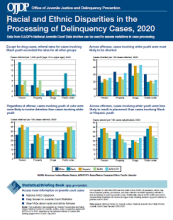
Racial and Ethnic Disparities in the Processing of Delinquency Cases, 2020
Opioid-stimulant trends in overdose toxicology by race, ethnicity, & gender: An analysis in Delaware, 2013-2019
Quantification of hordenine in a complex plant matrix by direct analysis in real time-high-resolution mass spectrometry: Application to the "plant of concern" Sceletium tortuosum
Impacts of Successive Drug Legislation Shifts: Qualitative Observations from Oregon Law Enforcement
Remarks of James K Stewart Before the Fourth Annual International Symposium on Criminal Justice Issues on September 11, 1989
National Institute of Justice: NIJ Program Plan 1993
Forensic sciences and the Philippines’ war on drugs
The Intersection of Methamphetamine and Violence in the United States: A County-level Assessment of Methamphetamine Overdose Mortality and Violent Crime
Delaware Opioid Metric Intelligence Project, Final Report
Non-contact detection of fentanyl and other synthetic opioids: Towards a generalized approach to the detection of dangerous drug clases
Research and Development Using High-level Quantum Chemistry Calculations for the Creation of a Rapid Field Test for the Identification and Differentiation of Hemp and Marijuana
Project on Human Development in Chicago Neighborhoods
Controlling Street-level Drug Trafficking: Evidence From Oakland and Birmingham
Keeping the Prison Clean: An Update on Pennsylvania's Drug Control Strategy
Longitudinal Study: Alternatives to Incarceration Sentencing Evaluation, Year 3
Modern Policing and the Control of Illegal Drugs: Testing New Strategies in Two American Cities
Learning from Doing Evaluating the Effectiveness of the Second Chance Act Grant Program
Reauthorized in 2018, the Second Chance Act (SCA) aims to reduce recidivism and improve outcomes for people returning from state and federal prisons, local jails, and juvenile facilities through the provision of federal grants. During this panel, National Institute of Justice-funded researchers will detail two ongoing evaluations of the SCA grant program:
- An evaluation of the effectiveness of the SCA grant program per Title V of the First Step Act.
- A longitudinal examination of the long-term impacts of the SCA program.
See the YouTube Terms of Service and Google Privacy Policy