Social and Behavioral Science
Is Juvenile Justice System Involvement Context-Dependent?: The Differential Experiences of Older Foster Youth in the Context of Extended Foster Care
A Comparison of Self-control Measures and Drug and Alcohol Use Among College Students
The Atlanta Comprehensive School Safety Initiative, Final Study Report
Study Protocol Paper for the Multisite Randomized Controlled Trial of Comprehensive Trauma Informed Reentry Services for Moderate to High-risk Young Males Releasing from State Prisons
Defining Impact of Stress and Traumatic Events on Corrections Officers Competition
Delaware Opioid Metric Intelligence Project, Final Report
Assessing a School Justice and Behavioral Health Collaborative Approach to Improving School Safety
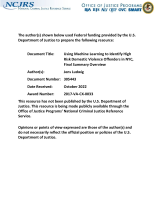
Using Machine Learning to Identify High Risk Domestic Violence Offenders in NYC, Final Summary Overview
Expungement: Criminal Records as Reentry Barriers
The District of Columbia Mayor’s Focused Improvement Area Initiative: Review of the Literature Relevant to Collaborative Crime Reduction
Identifying online risk markers of hard-to-observe crimes through semi-inductive triangulation: The case of human trafficking in the United States
Human behavior inspired cognitive radio network design
Predicting dynamical crime distribution from environmental and social influences
The Role of Mass and Social Media in Radicalization to Extremism
Social Media and Domestic Radicalization
Social media has become a potent tool for spreading extremist beliefs and promoting violent extremism. NIJ Social Science analyst Aisha Javed Qureshi joins writer-editor Paul Haskins for a conversation about how scientific research is helping law enforcement and other agencies understand and address this growing concern.