Laboratory operations
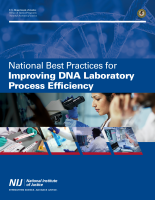
National Best Practices for Improving DNA Laboratory Process Efficiency
Conference Proceedings: 2018 Research and Development Symposium
Medical Examiner and Coroner Outsourcing Study: A Qualitative Study and Cost-Benefit Analysis
Using Risk Management to Optimize Forensic Laboratory Operations
Testing the Accuracy and Reliability of Palmar Friction Ridge Comparisons: A Black Box Study, Full Report
Pandemic Impacts in the Workplace: Employee Wellness, Returning to the Office, and Remote Testimony
Facial Marks as Biometric Signatures to Distinguish between Identical Twins
Analysis of Facial Marks to Distinguish between Identical Twins
Laboratory Information Management System Implementation
Model Strategies for Field Drug Testing Programs
Developmental Validation of a MPS Workflow with a PCR-Based Short Amplicon Whole Mitochondrial Genome Panel
VEMOS (Visual Explorer for Metrics of Similarity)
The Effects of Temperature on Blowfly Colonization of Decomposing Human Bodies
THF Co-solvent Pretreatment Prevents Lignin Redeposition from Interfering with Enzymes Yielding Prolonged Cellulase Activity
Establishing Sufficiency Thresholds for Assessing the Quality of Mass Spectral Data
Data Systems Imperative in 21st Century Forensic Services
Application of the OSAC Registry of Standards to Forensic Science Service Providers' Quality Systems
Legalization of Marijuana: The Journey of Marijuana Laws in Colorado and Ohio
Census of Publicly Funded Forensic Crime Laboratories (Bureau of Justice Statistics)
Provides a comprehensive look at the forensic services provided by federal, state, and local crime labs across the nation and the resources devoted to completing the work. The Census of Publicly Funded Forensic Crime Laboratories collects data on staff, budgets, and workloads within publicly operated labs. The census also provides information on lab accreditations, proficiency tests, and other quality assurances.
National Survey of DNA Crime Laboratories (Bureau of Justice Statistics)
Provides national data on publicly operated forensic crime laboratories that perform DNA analyses. Data are collected on personnel, budgets, workloads, equipment, procedures, policies, and data processing. BJS first surveyed forensic crime laboratories in 1998, focusing solely on agencies that performed DNA analysis. The National Institute of Justice (NIJ) funded the 1998 study as part of a DNA Laboratory Improvement Program.
Best Practices for Engaging Participants in Video Conferences
Successful Onboarding in Crime Laboratories
Post-mortem Computed Tomography of Natural Death
Wellness and Operations