Child welfare
An Assessment of Dual System Data and Practices Capacity across Juvenile Justice and Child Welfare Systems
Progressing from Evidence to Action
Children of the Incarcerated Must Be Studied, and Responded to, Comprehensively
Who Will Become Productive Adults? Longitudinal Patterns of Gainful Activities Among Serious Adolescent Offenders
Evaluating Impacts of the Philadelphia Police School Diversion Program: An Alternative to Arrest Policing Strategy
Developmental consequences of emotional abuse and neglect in vulnerable adolescents: A multi-informant, multi-wave study
Reducing Youth Incarceration for Runaway and Truancy: A National Scan of Practice and Evaluability Assessments in Three Sites
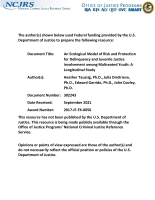
An Ecological Model of Risk and Protection for Delinquency and Juvenile Justice Involvement among Maltreated Youth: A Longitudinal Study
Post-implementation of a Safe Harbor law in the US: Review of state administrative data
Dual System Youth: At the Intersection of Child Maltreatment and Delinquency
Study Revealed Safe Harbor Laws Increased Protections for Sex-Trafficked Youth, Identified Needs for Agency Support and Judicial Training
A study of Kentucky’s safe harbor laws revealed they have helped decriminalize sex-trafficked youth. However, the study also highlighted a lack of resources and training for child welfare personnel and judges who work with these youth.
Study Revealed Safe Harbor Laws Increased Protections for Sex-Trafficked Youth, Identified Needs for Agency Support and Judicial Training
Dual System Youth: At the Intersection of Child Maltreatment and Delinquency