


The National Institute of Justice hosted a Forensic Science Research and Development webinar series the week of September 14 - 18, 2026. Over the course of five days, NIJ presented two-hour sessions featuring key NIJ-funded forensic science research. Each day focused on a specific forensic discipline, including trace evidence, fire investigation, physics and pattern analysis, anthropology, pathology, seized drugs, toxicology, and biology, as well as research from graduate fellows.
Each session emphasized:
- Validation and Implementation: Practical pathways for transitioning research to operational practice
- Statistical Foundation: Rigorous statistical approaches to forensic evidence interpretation
- Error Rate Studies: Understanding limitations and reliability of forensic methods
- Interdisciplinary Collaboration: Opportunities for cross-discipline partnerships
- Technology Transfer: Resources and support available for adopting new methodologies
- Research-to-Practice: Actionable recommendations for immediate laboratory application
We invite you to watch one or more sessions that align with your professional interests and expertise. Whether you're focused on a specific discipline like toxicology or seized drugs, or want to explore emerging research across multiple fields from trace evidence to anthropology, there's something valuable for everyone.
Watch the recorded sessions below.
Date and Time: Monday, September 14, 2026, 1:00 - 3:00 PM ET
Access the transcript
See the YouTube Terms of Service and Google Privacy Policy
Session Overview: This opening session showcases scientific research in trace evidence analysis, pattern interpretation, and fire investigation. Presentations will highlight innovative analytical techniques, statistical approaches to pattern evidence, and emerging technologies that enhance the scientific rigor of these forensic disciplines.
Goals:
- Present advances in trace evidence detection, collection, and analysis methodologies
- Demonstrate the application of physics principles and statistical methods to pattern interpretation
- Showcase research improving the scientific foundation of fire origin and cause determination
- Highlight interdisciplinary approaches that bridge multiple forensic disciplines
Expected Outcomes:
- Practitioners will learn about validated methods and technologies ready for laboratory implementation
- Researchers will identify collaboration opportunities and gaps in current methodologies
- Attendees will gain understanding of best practices for evidence interpretation and testimony
- Knowledge transfer regarding error rate studies and validation protocols for pattern evidence
Target Audience: Crime scene investigators, trace evidence examiners, fire investigators, firearms examiners, toolmark examiners, footwear/tire track examiners, latent print examiners, and forensic laboratory administrators
Speakers:
| Tatiana Trejos |
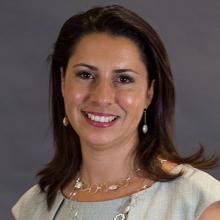
Dr. Trejos is a professor in the Department of Forensic and Investigative Sciences at West Virginia University. Her research focuses on evidence interpretation and the discovery of chemical signatures of forensic materials using spectrochemical methods. Glass, paints, polymers, inks, and gunshot residues are among the trace materials she investigates. Dr. Trejos is a recipient of prestigious awards, has authored 100 peer-reviewed scientific publications and book chapters, and contributes as an expert to numerous national and international organizations by developing consensus-based best practices, mentoring and disseminating research, and implementing advanced technology and quality management in forensic laboratories. |
| Shuna Ni |
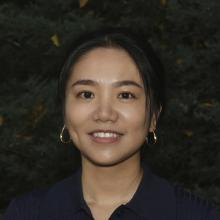
Dr. Shuna Ni is an assistant professor of Fire Protection Engineering at the University of Maryland, College Park, and a recipient of the 2026 NSF CAREER Award. Ni’s research focuses on fire forensics, fire resilience of wildland-urban interface communities, structural fire engineering, the impact of fire on civil infrastructure, fire safety of tall mass-timber buildings, and multiple hazards. Her research has been funded by the National Science Foundation, National Institute of Justice, Fire Protection Research Foundation, SFPE Foundation, University Transportation Centers, BLM-National Interagency Fire Center, Grand Challenges Grants Program at the University of Maryland, and industrial partners such as FM. |
| Meredith Coon |
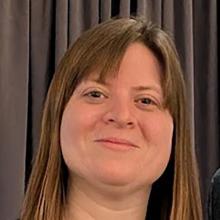
Meredith Coon is a certified latent print examiner currently employed by Aver LLC. She is a past president for the Chesapeake Bay Division of the International Association for Identification and has been a practitioner for 15 years. Her publications as author and co-author involve the latent print discipline and statistical applications in forensic sciences. |
| Ranjan Maitra |
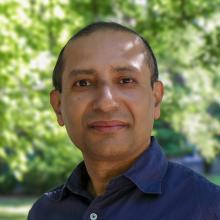
Ranjan Maitra is Charles and Vicki Sampson Professor in the Department of Statistics at Iowa State University. His prior appointments were as Research Scientist in the Statistical Analysis and Data Mining Research group at Bell Communications Research, and as tenure-track and tenured faculty member in the Department of Mathematics and Statistics at the University of Maryland, Baltimore County. He received Bachelor of Statistics (with Honours) and Master of Statistics degrees from the Indian Statistical Institute, Calcutta, India in 1990 and 1992, and a PhD degree in statistics in 1996 from the University of Washington. His research interests include the analy- sis of massive datasets, computational statistics, cluster analysis and statistical image analysis. He received best paper and poster awards in 1995, 1996, 1996 and 1998 and the National Science Foundation’s (NSF) CAREER award in 2003. In 2011, he was elected Fellow of the American Statistical Association (ASA) and elected Member of the International Statistical Institute. He received Iowa State University's College of Liberal Arts and Sciences (LAS) Graduate Mentoring and Outstanding Achievement in Research awards in 2022 and 2024. He is Editor of Sankhyā: The Indian Journal of Statistics, Series B, since 2025. Previously, he was Editor of Statistics Surveys (2010-25) and of Statistical Analysis and Data Mining – The ASA Data Science Journal (2018-20). He is also an associate editor of the Journal of the Royal Statistical Society, Series A. He was a standing committee member of the National Institutes of Health (NIH) study section on the Neural Basis of Psychopathology, Addictions and Sleep Disorders from 2018-22. His research has been funded by the NSF, the NIH, the National Institute of Justice and the National Oceanographic and Atmospheric Administration. His mentored students have so far won 16 national and international student paper competitions. |
Date and Time: Tuesday, September 15, 2026, 1:00 - 3:00 PM ET
Access the transcript
See the YouTube Terms of Service and Google Privacy Policy
Session Overview: This session explores research advancing human identification, skeletal trauma analysis, and death investigation. Presentations will feature innovations in skeletal analysis, decomposition studies, time since death estimation, and multidisciplinary approaches to complex medicolegal investigations.
Goals:
- Present novel methodologies for human identification in challenging circumstances
- Demonstrate advances in biological profile estimation (age, sex, ancestry, stature)
- Showcase research on skeletal trauma interpretation and postmortem interval estimation
- Highlight collaborative approaches between anthropology and pathology disciplines
Expected Outcomes:
- Medical examiners and coroners will learn about enhanced techniques for death investigation
- Anthropologists will gain knowledge of validated population-specific methodologies
- Attendees will understand current research addressing identification of fragmented, burned, or decomposed remains
- Enhanced awareness of interdisciplinary protocols for mass disaster response
Target Audience: Forensic anthropologists, medical examiners, coroners, death investigators, forensic odontologists, and medicolegal administrators
Speakers:
| Jessica Metcalf |
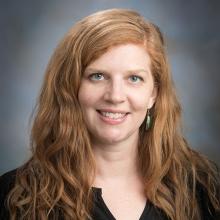
The Metcalf lab leads highly interdisciplinary, innovative research projects that span the fields of animal science, health, and forensics by combining experimental ecology, large genomic datasets, and bioinformatics tools. The Metcalf lab is a leader in carrion decomposition microbial ecology, and applies this knowledge to develop microbiome tools for forensic science. Metcalf earned a BS in chemistry from the University of Georgia and a PhD in ecology and evolution from the University of Colorado Boulder. She completed postdoctoral positions in ancient DNA at the University of Adelaide in South Australia and in microbiome science at UC San Diego. She joined Colorado State University in 2016 as part of the Microbiome Systems Cluster Hire Initiative. She is a professor in the Department of Animal Sciences, co-director of the Colorado State Microbiome (CoSMic) Network, and associate director of the Cell & Molecular Biology graduate program at CSU. |
| Rachel Buckley |
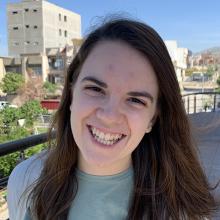
Rachel Buckley is a Ph.D. candidate in mechanical engineering at the University of Utah. Her research focuses on retinal injury mechanics, with specific interest in molecular and morphological damage to the retinal microvasculature to better understand the link between head trauma and retinal hemorrhage. She graduated with a BS in engineering from Taylor University and a MS in biomedical engineering from the University of Utah. Her research is supported by the National Institute of Justice. |
| Chris Goden |
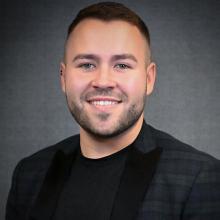
Dr. Christopher Goden is an assistant professor in the Department of Anthropology and Middle Eastern Cultures at Mississippi State University. He has extensive forensic anthropology and medicolegal death investigation experience, having contributed to cases at the local, state, and national levels, with particular emphasis on large-scale cold case analyses. His research focuses on skeletal variation, trauma, and quantitative methods. He serves as one of two state forensic anthropologists for Mississippi through the Office of the State Medical Examiner. His PhD research was completed under NIJ grants awarded to the Injury Biomechanics Research Center. |
| Andrea Zurek-Ost |
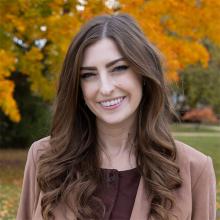
Andrea M. Zurek-Ost (PhD, University of North Carolina at Chapel Hill) is a postdoctoral scholar in the Department of Anthropology at Michigan State University (MSU). She works on MOSAIC, an NIJ-funded project aimed at unifying methods of sex, stature, population affinity, and age estimation for the biological profile. Her other research in forensic anthropology explores skeletal morphological as well as mass-spectrometry-based approaches to the biological profile. |
Date and Time: Wednesday, September 16, 2026, 1:00 - 3:00 PM ET
Access the transcript
See the YouTube Terms of Service and Google Privacy Policy
Session Overview: This session addresses the rapidly evolving landscape of controlled substances and toxic substances. Presentations will focus on emerging synthetic drugs, novel psychoactive substances, analytical challenges in toxicology, and innovative detection methods responding to the changing drug threat landscape.
Goals:
- Present research on identification and analysis of novel psychoactive substances and synthetic opioids
- Demonstrate advances in toxicological testing methods and instrumentation
- Showcase portable and presumptive testing technologies for field applications
- Highlight research addressing drug-facilitated crimes and impaired driving investigations
Expected Outcomes:
- Drug chemists will learn about validated methods for emerging substance identification
- Toxicologists will gain knowledge of novel analytical approaches and interpretation frameworks
- Law enforcement will understand capabilities and limitations of field-testing technologies
- Enhanced awareness of trends in clandestine laboratory operations and synthetic drug manufacturing
Target Audience: Forensic drug chemists, forensic toxicologists, medical examiners, DUI enforcement officers, clandestine laboratory investigators, and crime laboratory administrators
Speakers:
| J. Tyler Davidson |
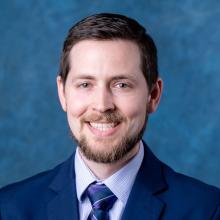
Dr. J. Tyler Davidson is an associate professor and the graduate program director for the Department of Forensic Science at Sam Houston State University. Before joining Sam Houston State University in the fall of 2020, Dr. Davidson earned his Ph.D. in forensic science from West Virginia University. His research interests are focused on forensic applications of mass spectrometry, including structural elucidation of novel synthetic drugs, novel approaches for differentiating hemp and marijuana, forensic applications of ambient ionization mass spectrometry, and field-portable instrumentation. Dr. Davidson’s research group blends innovation with practical application to address the needs of the forensic science community. |
| Ashley Fulton |
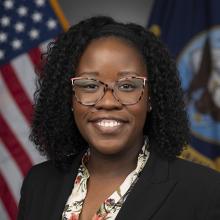
Dr. Ashley Fulton is a research chemist in the Chemistry Division at the U.S. Naval Research Laboratory (NRL) in Washington, DC. She earned her B.S. in chemistry from Xavier University of Louisiana and her Ph.D. in organic chemistry from Louisiana State University. Following a prestigious ASEE Postdoctoral Fellowship at NRL in 2020, Dr. Fulton transitioned into her current civilian role. Her high-impact research focuses on narcotics and explosives detection utilizing advanced analytical techniques, including ion mobility spectrometry (IMS), directly supporting critical national security and threat-detection missions. |
| Rajesh Sardar |
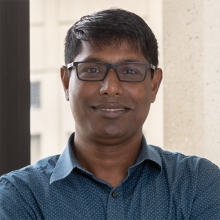
Rajesh Sardar joined the faculty at IU Indianapolis —formally IUPU - as an assistant professor in the Department of Chemistry and Chemical Biology in July 2010. In August 2016, he was promoted to associate professor. Since July 2022, he is a professor of chemistry and chemical biology. He is a full member of the Indiana University Simon Comprehensive Cancer Center of Cancer Controls and Prevention (CPC) group. Rajesh began his career in chemistry at Calcutta University (Ramakrishna Mission Residential College, Narendrapur) and the Indian Institute of Technology (Kharagpur) obtaining B.Sc. and M.Sc. degrees in chemistry, respectively. In 2001, he arrived in the United States to pursue a Ph.D. at the Graduate Center, City University of New York, studying polymer-based synthesis of metal nanocrystals with unique optoelectronic properties. His research experience expanded to controlling the colloidal assembly of nanocrystals during his faculty internship with Professor Jennifer Shumaker-Parry at the University of Utah. He then moved to the University of North Carolina at Chapel Hill as a post-doctoral fellow to work with Professor Royce Murray on electrochemical charge storage properties of metal nanocrystals. |
| Ana Miguel Fonseca Pego & Marta Concheiro-Guisan |
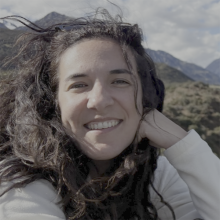
Dr. Ana Pego is an assistant professor of forensic toxicology at John Jay College of Criminal Justice. Her research focuses on hair analysis, particularly external contamination, and the effects of cosmetic treatments. She also develops projects related to new psychoactive substances, harm reduction, and science communication. 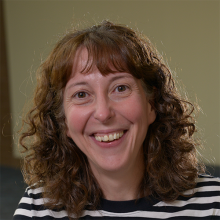
Marta Concheiro-Guisan, Pharm.D., Ph.D., is an associate professor and director of the Forensic Sciences Master’s Program at John Jay College of Criminal Justice, CUNY. Trained in pharmacy and toxicology at the University of Santiago de Compostela, Spain, she completed her postdoctoral work at the National Institute on Drug Abuse (NIDA) in Baltimore, MD. She later served there as a research scientist before joining John Jay in 2015. |
Date and Time: Thursday, September 17, 2026, 1:00 - 3:00 PM ET
Access the transcript
See the YouTube Terms of Service and Google Privacy Policy
Session Overview: This session highlights transformative research in forensic DNA analysis and biological evidence examination. Presentations will feature advances in DNA technologies, mixture interpretation, non-traditional biological evidence, genealogy applications, and emerging molecular methods that expand investigative capabilities.
Goals:
- Present innovations in DNA analysis techniques, including rapid DNA, massively parallel sequencing, and low-template DNA
- Demonstrate advances in complex mixture interpretation and probabilistic genotyping
- Showcase research on body fluid identification, microbiome analysis, and phenotypic prediction
- Highlight investigative genetic genealogy research and ethical considerations
Expected Outcomes:
- DNA analysts will learn about emerging technologies and validation considerations
- Laboratory administrators will understand resource implications of new methodologies
- Investigators will gain awareness of expanded DNA capabilities for case resolution
- Enhanced understanding of statistical approaches to DNA evidence interpretation and reporting
Target Audience: DNA analysts, forensic biologists, crime laboratory directors, law enforcement investigators, prosecutors, and defense attorneys
Speakers:
| Daniele Podini |
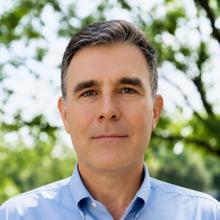
Prof. Daniele Podini is chair and associate professor of forensic molecular biology at The George Washington University. His research focuses on forensic molecular genetics, including microhaplotypes, massively parallel sequencing, human identification, and DNA analysis of challenging samples including rootles hair. Before joining GWU, he worked in forensic DNA analysis with the Italian Carabinieri and directed the forensic section of a private molecular diagnostics laboratory in Rome. His research has been supported by the NIJ, FBI, and U.S. Department of Defense. |
| Bruce McCord |
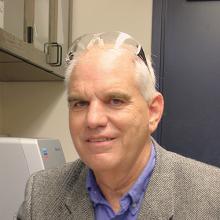
Bruce R. McCord is a professor of analytical and forensic chemistry at Florida International University. Prior to working at FIU, he was an assistant professor at Ohio University and a research chemist at the FBI Laboratory. His current research interests involve the development of procedures for forensic analysis including both chemical assays (trace analysis) and biochemical (genomics). Current research interests include microfluidic sensing, surface enhanced Raman spectroscopy and microbial DNA genomics/NGS. He serves as deputy editor for the journal Electrophoresis, editor for Forensic Sciences (MDPI) and is a member of the editorial board of the Journal of Forensic Chemistry. In 2008 he received the Paul Kirk Award from the American Academy of Forensic Sciences for his contributions to the field of criminalistics. |
| Sarah Cavanaugh |
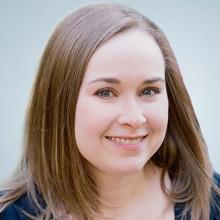
Sarah Cavanaugh, MSFS is a senior research scientist at Bode Technology in Lorton, VA. She holds a Master of Science in forensic science from Towson University in Towson, MD and a Bachelor of Science in biology from the University of Arizona in Tucson, AZ. Ms. Cavanaugh has been a member of the Bode Research and Development team for 16 years. While at Bode, she has focused on efforts to evaluate, develop, and implement massively parallel sequencing (MPS) methods for a variety of forensically relevant issues from mixture deconvolution to forensic investigative genetic genealogy. |
| August Woerner |
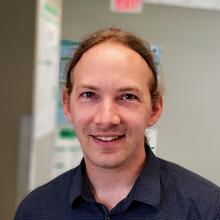
August Woerner is an associate professor in the Department of Microbiology, Immunology and Genetics at the University of North Texas Health Science Center at Fort Worth. By training, he is a computer scientist and a geneticist, and he has been an active researcher in the fields of computational biology, bioinformatics and population genomics for over 20 years. August has served on several genome consortia, developed numerous software packages, and his works have been cited over 5500 times. Much of August’s current research focuses on whole genome sequencing, in particular, its application to forensic genetic genealogy. |
| Glendon Parker |
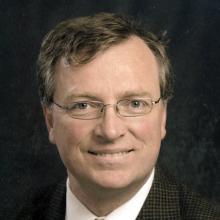
Glendon Parker is a biochemist who has developed proteomic tools to interrogate biological evidence. He currently is a member of the Environmental Toxicology Department at UC Davis, but has had stints working as a researcher in several institutions, most recently at the Forensic Science Center at Lawrence Livermore National Laboratory. He has also taught biology and biotechnology at Utah Valley University. He is the inventor of proteomic genotyping, and has been presenting at forensic science conferences since 2010. |
Date and Time: Friday, September 18, 2026, 1:00 - 2:00 PM ET
Access the transcript
See the YouTube Terms of Service and Google Privacy Policy
Session Overview: This closing session spotlight outstanding research by NIJ Graduate Research Fellows, representing the next generation of forensic scientists.
Goals:
- Highlight exceptional graduate student research across all forensic disciplines
- Promote career development and mentorship opportunities in forensic science
Expected Outcomes:
- Graduate Research Fellows will gain experience presenting to practitioner audiences
- Enhanced awareness of the academic forensic science pipeline and future research directions
- Networking opportunities between students, researchers, and potential employers
Target Audience: Forensic scientists across all disciplines, academic researchers, laboratory administrators, and graduate students
Speakers:
| Betzaida Maldonado |
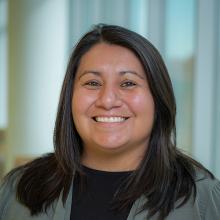
Betzaida Maldonado obtained a B.S. in forensic and investigative sciences from West Virginia University and an M.S. in forensic science from Marshall University. Her professional training included internships at the Denver Police Department and the D.C. Department of Forensic Sciences, followed by work as a forensic DNA analyst at the Georgia Bureau of Investigation. Betzaida is currently pursuing a Ph.D. in human genetics at the University of Colorado. As a National Institute of Justice Graduate Fellow, she is applying quantitative approaches to develop methods that support forensic interpretation of sequencing data. Betzaida is passionate about advancing forensic science through research and communicating results in ways that are accessible to the community. |
| Akshita Verma |
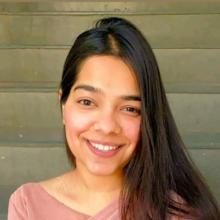
Akshita Verma is a Ph.D. candidate in chemistry (forensic track) at Florida International University (FIU), and a recipient of the NIJ Graduate Research Fellowship (FY 2024). Her research focuses on forensic and analytical toxicology, with an emphasis on non-targeted screening approaches using high-resolution mass spectrometry, including QTOF, Orbitrap and TIMS platforms for the detection and characterization of New Psychoactive Substances (NPS) in human biological matrices. She holds an M.S. in chemistry from FIU and an M.S. in forensic science from National Forensic Science University, India. Prior to her doctoral studies, she was a forensic science educator in India. |
| Jack Trimble |
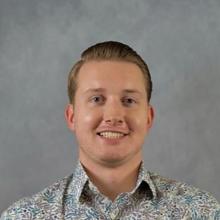
Jack Trimble is a Ph.D. candidate in the final year of the doctoral program at the University of Central Florida (UCF). His research focuses on developing novel chemical methods for the characterization of pollen in forensic applications, with an emphasis on advancing analytical approaches for the identification and differentiation of pollen evidence. He earned his B.S. in chemistry from Florida Southern College in 2021 and has nine years of experience working with mass spectrometry-based instrumentation. |