



Rich Johnston
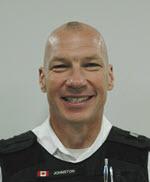
Rich Johnston recently began a partnership with BetaGov to conduct a randomized controlled trial (RCT) in the Barrie Police Service, making it one of the first agencies in Canada to run its own RCT. Rich's efforts were integral in expanding the LEADS program internationally. He holds a master's in leadership studies from the University of Guelph.
Stan MacClellan
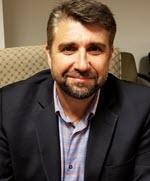
Stan is responsible for the Strategic Planning and Analytics Reporting branch of the Durham Regional Police Service, which includes oversight of the department's in-service training. He has worked for two of Ontario's larger police services and has expertise across a broad range of policing issues. He is working towards his doctorate in Policing and Security at Charles Sturt University and holds a bachelor's from St. Francis Xavier University and an MBA from Queen's University. He is an executive member of the Canadian Society of Evidence-Based Policing (CAN-SEBP).
Tara Calabro
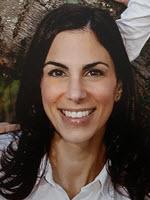
Deputy Inspector Tara Calabro has proudly served as a police officer with the New York City Police Department for 19 years. She currently serves as the Commanding Officer of the Enterprise Risk Management Division in the Professional Standards Bureau. She has previously managed and supported collaborative research projects and data analysis to inform policy recommendations, initiatives and program development under the Chief of Strategic Initiatives. During her tenure with the NYPD, Deputy Inspector Calabro has held patrol assignments, supervised a precinct crime analysis unit, worked as an analyst for the Real Time Crime Center, and lead the Information Technology Bureau's Program Management Office.
Aimee A. Haley
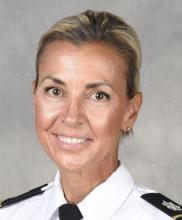
Commander Aimee Haley was the Accreditation Manager of the CALEA Accredited, Columbus Division of Police, Ohio, from 2011 through 2017 and moved on to the Internal Affairs Bureau then Narcotics Investigations. For the 14 years prior, she held positions in Patrol as an Officer, Sergeant and Lieutenant. Commander Haley was the Organized Crime Bureau Commander from 2022-2025 where she managed task forces, narcotics tactical entry teams, and investigators of narcotics, gangs, exploited children, human trafficking and economic crimes. Commander Haley has a BA degree in Criminal Justice from The Ohio State University. She is a certified Ohio Peace Officer Instructor, the past President of the State of Ohio Accreditation Resource Coalition, SOAR, former Chaplain Liaison and the recipient of several awards and recognitions. Commander Haley is a graduate of the Police Executive Leadership College, DC Police Leadership Academy and is a National Institute of Justice, Law Enforcement Advancing Data and Science merit scholar. Aimee devotes the rest of her time to matters of faith and family.
Chad DePew
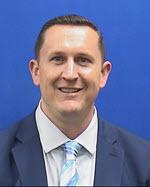
The KHN Police and Security Department has over 100 sworn police officers and 45 security/civilian employees and provides police and security services to 13 hospitals and medical facilities in a six-county region in southwest Ohio. Chief DePew is a graduate of the 264th class of the FBI National Academy, the Ohio Association of Chiefs of Police (OACP) Certified Law Enforcement Executive program, the OACP's Police Executive Leadership College, and the Northwestern University School of Police Staff and Command. Chief DePew holds a bachelor's in criminal justice from Ohio University, a master's in criminal justice administration from Miami University, and is currently working on his MBA from Louisiana State University. Chief DePew is also an adjunct professor at Sinclair Community College. He has previously conducted research on drug overdose data collection methods and is currently part of a team researching cardiovascular disease risk factors in police officers. As a LEADS scholar, Chief DePew is honored to have the opportunity to work with other scholars and contribute to research to aid the advancement of the criminal justice field.
Christopher W. Ortiz
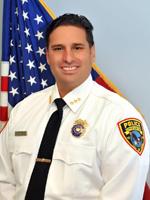
Chief Ortiz has served the Glen Cove, New York community for over 25 years, beginning as a patrol officer and rising through the ranks to Deputy Chief in 2015 and Chief in 2025. He oversaw multiple aspects of department operations, including grant procurement, patrol operations, investigations, professional standards, training, data analysis and policy. Chris earned a bachelor's degree in criminology from John Jay College, a master's degree in criminal justice administration from Long Island University, and a doctorate in criminal justice policy analysis from the City University of New York Graduate Center/John Jay College of Criminal Justice. Chief Ortiz has served as a research investigator on several NIJ projects and has published numerous scholarly articles on police practices. He has also served as a subject matter expert and provided technical assistance to several police agencies on a variety of policing subjects. Chief Ortiz is a graduate of the FBI National Academy and PERF's Senior Management Institute in Policing.
Edward Tjaden
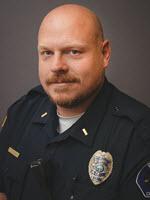
Edward Tjaden began his position as Chief of Police at the York Police Department in October of 2017. Prior to that, he spent the previous 18 years with the Gering Nebraska and Alliance Nebraska Police Departments, where he served as an officer, sergeant, instructor, narcotics investigator in a multi-jurisdictional High Intensity Drug Traffic Area task force, and Lieutenant/Operations Commander. He is a 2016 graduate of Northwestern University's School of Police Staff and Command and obtained his bachelor's in criminal justice administration in 2017. His experiences exemplify the "jack of all trades" description often found in rural law enforcement, including patrol, investigations, instruction, drafting and implementing policy, conducting forensic child interviews, planning large, high-risk events, supervising hiring processes, supervising training, and writing and administering grants. He has focused his studies on expanding the understanding that rural law enforcement officers, leaders, and agencies face both unique and typical policing challenges, and believes in addressing those challenges with a combination of academic and practical efforts.
Glendalay Garcia

Lieutenant Glendaly Garcia is a Hartford native who has proudly served with the Hartford Police Department for 19 years. She currently commands the Investigative Services Bureau's Crime Scene Division, which consists of the Crime Scene Unit, Fatality Accident Reconstruction Team, and Identification Unit. Previously, she was commander of the Major Crimes Division. Throughout her career, she has served in various capacities, serving as Chief of Staff and Public Information Officer, and supervising the Background Investigation Unit, Pistol Permit Unit, Domestic Violence Unit, Quality of Life Unit, Auxiliary Services Division, and Patrol. She has a master's in public policy law and government from Trinity College and a Bachelor of Science in health care (emphasis in respiratory care) from the University of Hartford. She is a graduate of the Senior Management Institute of Police (SMIP) Session 60, the Southern Police Institute's 137th Administrative Officers Course, and the City of Hartford Middle Management Institute. Lieutenant Garcia is committed to fostering an environment where scientific and technological creativity can contribute to Hartford becoming a leading place to live and work. With the backlogs of evidence in crime labs crippling investigative efforts to successfully apprehend, prosecute, and convict people accused of committing offenses, she believes forensic science needs to be acknowledged as the pivot of crime prevention and criminal investigations. Having served as a Crime Scene Detective and now leading command of the Crimes Scene Unit, she is committed to developing and implementing innovative solutions that will improve current practices in processing crime scenes.
Jonas H. Baughman
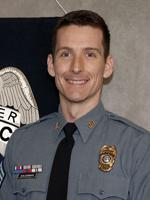
Captain Jonas Baughman is an 23-year veteran of the Kansas City, Missouri Police Department (KCPD). A native of the Kansas City area, Captain Baughman joined the KCPD after obtaining a B.A. in psychology from Creighton University. He has held assignments in patrol, investigations, administration, and crime/intelligence analysis during his tenure. Captain Baughman quickly found crime analysis to be his professional passion early in his career, with more than half of his career having been in positions related to crime or intelligence analysis. He created and supervised the KCPD's first Real-time Crime Center team, directed a squad of detectives tasked with gang intelligence, and managed teams of analysts within KCPD’s Law Enforcement Resource Center. He currently work in the Office of the Chief of Police where he manages the agency’s data-driven strategies, oversees ongoing research projects, and provides strategic analyses and other metrics for executive staff.
Captain Baughman's primary interests include spatial analysis and data analytics, including data mining and visualization. He is also interested in building upon his background in psychology through post-graduate work in industrial/organizational psychology. Captain Baughman feels there is much to be learned by working with international police departments, allowing law enforcement agencies to leverage best practices from across the globe. He looks forward to networking with and learning from others within the LEADS program, and hopes this will ultimately make communities across America, including Kansas City, safer places to call home.
Captain Baughman’s work has been awarded and recognized from organizations such as the International Association of Chiefs of Police and the Center for Problem-Oriented Policing. He is also a 2024 inductee into George Mason University’s Evidence-Based Policing Hall of Fame.
Myron Holubiak
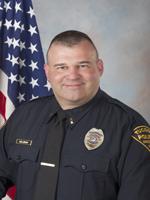
Lieutenant Myron Holubiak has served the community of Tucson, Arizona since 1998. He is assigned to the Analysis section, which creates data-driven analyses of patrol deployments, criminal intelligence, and other policy, strategic, and operational metrics. Lieutenant Holubiak oversees the CompStat and Research and Analysis units, and the Tucson Real-time Analytical Crime Center (TRACC), which provides tactical intelligence to responding operations units through ad hoc research. Previously, he supervised Audit and Best Practices, which analyzes department-member uses of force and researches industry standards, guiding the design of policies and operational practices. He is a graduate of the University of Arizona.
Stuart Greer
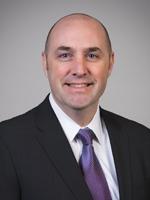
Stuart Greer is a Captain with the Morristown (NJ) Bureau of Police and serves as the Commanding Officer of the Administrative Division. In this role, his responsibilities include research & planning, data analysis, compstat, police training, social media, police records, and public information. He is a co-founder and board member of the American Society of Evidence-Based Policing and has served as a LEADS Scholar at the National Institute of Justice where he contributed to the advancement of research in the development of policing tactics and strategies.
Captain Greer is a certified instructor with the New Jersey Police Training Commission and teaches both recruit and in-service classes. He is an executive Policing Fellow at the Police Foundation in Washington, D.C. and has worked on projects designed to meet the goal of advancing Policing through innovation and science. He has served as a faculty instructor with the Virginia Center for Policing Innovation teaching Police Commanders evidence-based approaches to reducing homicide and gun violence.
He received a B.A. in Justice Studies from the College of Saint Elizabeth in Morristown, N.J., a Master of Studies (MSt) in Applied Criminology and Police Management at the University of Cambridge in the United Kingdom, and an Executive Master of Public Administrator program at the Robert F. Wagner Graduate School of Public Service at New York University.
Tim Donohoe
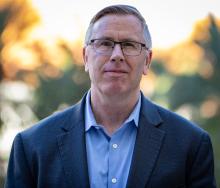
Tim Donohoe, a retired Commander with the Reno, NV Police Department, is a Manager at the Matrix Consulting Group, a firm that provides data-driven staffing, workload, and deployment analysis; organizational analysis; and strategic planning for law enforcement agencies nationwide. Prior to Matrix, Tim worked on international police reform projects with the United States Department of Justice, International Criminal Investigative Training Assistance Program (ICITAP), serving as the Mission Advisor for the Republic of Armenia and as a Senior Law Enforcement Advisor in Ukraine.
Tim holds master’s and bachelor’s degrees in Criminology and Criminal Justice and is a graduate of the Police Executive Research Forum’s Senior Management Institute for Police. He is an adjunct professor in the University of Nevada, Reno’s Department of Criminal Justice, teaches a 40-hour evidence-based policing course at the University of Louisville’s Southern Police Institute as part of the Command Officer Development Course, and is a United States Marine Corps veteran.
Daniel Stewart
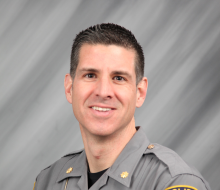
After joining the department in January 1999, Major Stewart spent the early part of his career in patrol and served as a field training officer, firearms instructor, and control and defensive tactics instructor. He spent several years in Recruiting before being promoted to the rank of lieutenant in 2009. He spent four years in Operations before being assigned to the Planning and Research Unit. During this assignment, Daniel surveyed other law enforcement agencies and conducted thorough research on topics that benefited the department, such as vehicle equipment and early intervention systems. Additionally, he helped to develop written directives on critical projects such as body-worn cameras and Naloxone. He was promoted to the rank of Captain in 2015. As Captain, he spent time in Operations as a Shift Commander and in Investigations as the Property Crimes Commander. He spent time as the Public Information Officer for the department until his promotion to Major in June 2021. He oversees the Uniform Support Division which encompasses Airport Police, Air Support, the Bricktown Entertainment District, Emergency Management, the Emergency Response Team, the Fatality Traffic Investigations Unit, Hit and Run, the Homeless Outreach Team, Solo Motors and Special Events.
Greg Stewart
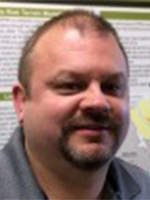
Greg Stewart is a sergeant with the Portland, Oregon, Police Bureau (PPB). His 20 years of service include being a patrol officer, patrol sergeant, and investigative sergeant. He supervised the Bureau's Domestic Violence Reduction Unit and implemented an automated actuarial risk assessment system for people accused of (or convicted for) domestic violence offenses. He is currently the sergeant of the PPB's Crime Analysis Unit. His assignments include developing patrol strategies aimed at reducing crime while improving the relationship between police and community members and supervising PPB non-sworn crime analysts. In this capacity, he assists the PPB in operationalizing existing police-related research as well as conducting research on emerging issues.
Ivonne Roman

Captain Roman currently commands the Criminal Investigations Bureau (CIB). CIB consists of the following units: Homicide, Major Crimes, Robbery, Special Victims, Youth Aid, Auto Squad, Crime Scene, Ballistics, Criminal Intelligence Unit, Real Time Crime Center, and the Narcotics Unit. Roman earned a master's degree in public administration from Rutgers University.
Newark Police is currently operating under a Federal Consent Decree. Roman is interested in research on police perceptions of legitimacy and procedural justice. Extant literature thoroughly explores citizens' perceptions of legitimacy, but there is a dearth of research regarding officers' perception and factors that influence those perceptions. Understanding both officers' and citizens' perceptions on these topics can have broad applications when implementing recommendations from the President's Task Force on 21st Century Policing.
James T. Williams
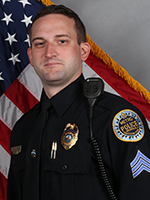
Sergeant Williams is the supervisor over the DUI Enforcement Unit for the Metropolitan Nashville Police Department. During his time with the department, he has served as an officer in patrol, Crash Investigator and Reconstructionist, and patrol supervisor. In his current position, Sergeant Williams is responsible for analyzing crash and arrest data pertaining to driver impairment and develops intervention strategies. He also supervises the investigation of crashes involving life-threatening injuries and fatalities. Sergeant Williams has a bachelor's degree in sociology from the University of Kentucky and a master's degree in Public Policy and Administration from Northwestern University. For his master's thesis, Sergeant Williams researched the use and effectiveness of predictive analytics to inform enforcement strategies aimed at reducing traffic-related deaths and offenses.
Jeffery Egge
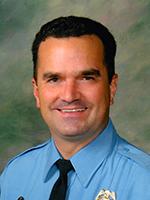
Sgt. Jeffery Egge currently serves as supervisor of Strategic Analysis for the Minneapolis Police Department (MPD) and specializes in the study of homicide, gang crime, hot spots, and research translation. With MPD, Sgt. Egge has worked in CompStat, Organized Crime, Homicide, and Patrol. Sgt. Egge holds a master's degree in police leadership, administration, and training from the University of St. Thomas, and a bachelor's degree in organizational management from Concordia University. He was a Senior Research Fellow at the Police Executive Research Forum (PERF) and has contributed to publications on crime analysis, research and planning, and predictive policing. Jeff has presented at national symposia for the Center for Evidence Based Crime Policy, Police Executive Research Forum, and the International Association of Crime Analysts. Prior to joining the MPD, he was an Investigations and Training Specialist and Loss Prevention Manager for Dayton Hudson (now Target Corp).
Jeremiah Johnson
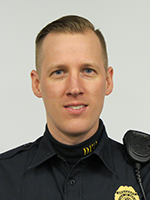
Sergeant Johnson has served the Town of Darien (CT) for the last sixteen years. During his time as a detective sergeant, he leveraged research to increase his agency's investigative capacity by cross-training a subset of patrol officers to function as detectives. In his current role as a night shift supervisor, he lead a multi-site randomized controlled trial to test the relationship between enhanced patrol vehicle lighting and crime. Sgt. Johnson holds a bachelor's degree in sociology from Geneva College, a master's degree in justice administration from Western Connecticut State University, a master's degree in criminal justice from John Jay College, and a doctorate in criminal justice from the City University of New York Graduate Center. His dissertation research focused on the role of relational networks in diffusing law enforcement innovations.
Joan Fiesta
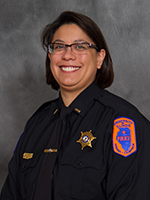
The University of Illinois Police Department is a fully sworn department that serves a community of over 45,000 students and 6,000 faculty and staff members. Lieutenant Fiesta currently serves as the administrative bureau commander, overseeing the crime prevention, training, telecommunications, and records units. The University is a rich environment for research and educational opportunities; Fiesta connects researchers from various disciplines to the department. The results of the research help the department develop evidenced-based training and practices. Lieutenant Fiesta holds a bachelor's degree in rhetoric with a minor in Russian from the University of Illinois and a master's degree in organizational leadership from Gonzaga University.
Ken Clary
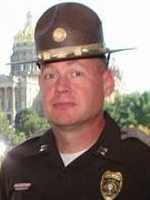
Chief Clary was named Police Chief of the city of Bellevue, Nebraska, in August 2020.
Prior to his current position, Ken Clary served as an Area Commander for the Iowa State Patrol (ISP), which included the oversight of four patrol districts including approximately one quarter of the State of Iowa. During his time as a Commander, Captain Clary held a variety of positions including CALEA Accreditation Coordinator for the Department of Public Safety (DPS) and Assistant Field Operations for the ISP. In these positions, he utilized research and worked with numerous law enforcement agencies to determine best practices in hiring and promotional processes, as well as resource allocation. He worked directly with the Iowa Governor's Traffic Safety Bureau (GTSB) to implement statewide police training and public education programs to combat drowsy driving. Subsequently, in June, Iowa GTSB and DPS hosted the first of its kind National Drowsy Driving Summit with the National Highway Traffic Safety Administration (NHTSA).
Obed Magny
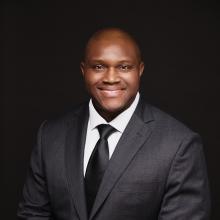
Dr. Obed Magny, CEO of Magny Leadership and former Sacramento Police Department officer with nearly two decades of experience. Throughout his career, Dr. Magny has worked in a variety of units, including Patrol, School Resource Officer, Professional Standards Unit, and Crime Suppression Unit. He holds a Bachelor’s Degree in Criminal Justice and Sociology, a Master’s Degree in Emergency Services Administration, and a Doctorate Degree in Organizational Leadership. His areas of expertise include motivation, job satisfaction, organizational leadership, and social/emotional intelligence. In addition to his role as a consultant, Dr. Magny is also a Policing Fellow at the National Policing Institute and a founding member of the American Society of Evidence-Based Policing. He is a strong advocate for utilizing scientific research in the field of policing.
Rachel Tolber

Rachel Tolber was appointed Chief of Police of the Redlands Police Department on June 12, 2023. The Redlands Police Department is a full-service, municipal police agency that prides itself on its strong partnership with the community and high levels of public safety services.
Chief Tolber began her law enforcement journey in 1997 when she was hired by the Redlands Police Department as an undergraduate student intern performing as a research assistant. In 1998, she became a police officer, and since then has served the department in a variety of positions and operational, tactical, investigative, and training assignments. Chief Tolber possesses a bachelor’s degree in psychology and sociology from the University of Redlands, and she holds a master’s degree in criminology, law and society from the University of California, Irvine. She also earned a master’s degree in applied criminology from the University of Cambridge in the United Kingdom. In 2021, she completed the Commission on Peace Officer Standards and Training Command College. Chief Tolber is a founding member and current Treasurer of the American Society of Evidence-Based Policing and was recently selected to serve on the IACP’s Research Advisory Committee.
Wendy H. Stiver
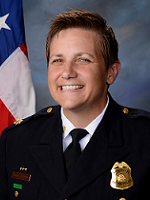
Major Stiver was an invited presenter at an NIJ-sponsored event.
Major Stiver is the commander of the Central Patrol Division at the Dayton (OH) Police Department. She has also served as the commander of the Central Investigations Bureau and in both East and West Patrol Divisions. She holds a master's degree in criminal justice from the University of Cincinnati. She is also a graduate of the Police Executive Leadership College and Certified Law Enforcement Executive course. Major Stiver is an adjunct professor at Wright State University and teaches graduate courses in criminological theory. In addition to a current research project on police intervention in infant mortality cases, Major Stiver led a foot patrol evaluation with the University of Cincinnati, quantitative analysis on patrol officer exposure to secondary trauma and is working on a volunteer hot spot patrol project, photo enforcement compliance and a sentinel event crash reduction multi-disciplinary team review.
Cory Nelson
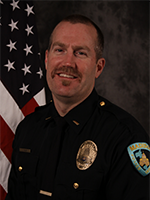
Lieutenant Nelson is currently in charge of the Professional Standards and Internal Affairs Office within the Madison (WI) Police Department, a department of approximately 450 commissioned and 150 civilian employees. Having never been to the IACP Conference previously, Lieutenant Nelson came away from the event very impressed; with the major take away being the importance of using data and research to make departments more efficient. After the conference, Lieutenant Nelson contacted an academic researcher at a college in Wisconsin and explained his plan to implement a domestic violence initiative that targets persons convicted of a crime. Lieutenant Nelson and the researcher plan on beginning research and discussions in January 2016.
Erin Freidline
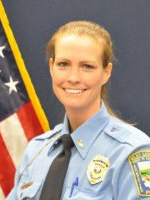
Erin Freidline joined the Riley County Police Department in 2000. She served in several capacities working various patrol shifts, serving as a detective and task force officer. She promoted through the ranks, spending time in both patrol and investigations as a supervisor. In 2018, Erin was promoted to Major and served as the Commander of the Support Division before transferring to Investigations where she supervised all the investigative units in addition to the victim advocacy program. In October of 2024 Erin was selected as the Deputy Director for the Riley County Police Department and continues to oversee daily operations of the agency. She further aids in budget development, human resources oversight, and fiscal management for agency funds.
Erin is a graduate of the 264th session of the FBI National Academy and is a LEADS (Law Enforcement Advancing Data & Science) scholar through the National Institute of Justice. She was a recipient of the 40 Under 40 award from the IACP because of her leadership and commitment to the policing profession. She received the Young Alumni award from Kansas State University for her service to the community.
She earned a bachelor’s degree in Sociology with an emphasis in Criminology from Kansas State University. She later earned a master’s degree in executive leadership from Liberty University. She holds a certificate from the University of Kansas Public Management Center with the Certified Public Manager program.